
Home › How to Take FemiCore
How to Take FemiCore: Dosage, Timing and Tips for Best Results
FemiCore is simple to take, but a few details make a real difference to how well probiotics work. This guide covers the right dose, the best time of day, what to do with antibiotics, and the habits that support your bladder while you take it.
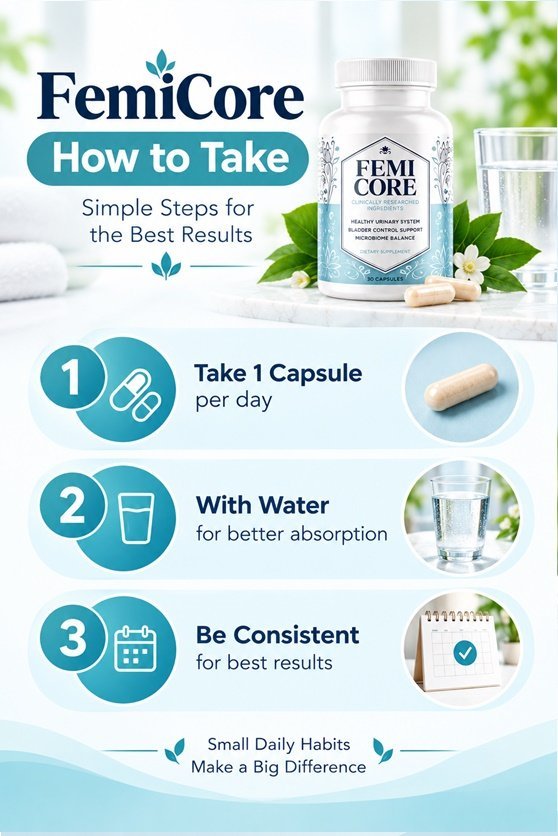
FemiCore dosage
The manufacturer's recommended dose is one capsule a day, taken with a full glass of water. Don't take more than the label says. A higher dose won't speed up results, and it would increase your intake of uva ursi and berberine, the two ingredients that need the most care.
Always follow the directions printed on your bottle, as they take priority if they differ from anything here.
Best time to take FemiCore
Take FemiCore in the morning with breakfast. There are two reasons. Food helps buffer stomach acid, so more of the live probiotic bacteria survive the journey to your intestine. And taking it with a meal makes stomach upset less likely.
The exact hour matters less than consistency. Pick a time you'll remember, such as alongside your morning coffee or tea, and stick to it. Many people keep the bottle next to something they use every morning.
Taking FemiCore with antibiotics
Antibiotics can't tell harmful bacteria from helpful ones, so they may kill the probiotic strains in FemiCore before they can settle in. The manufacturer recommends finishing your full course of antibiotics before starting FemiCore.
Never stop antibiotics early to start a supplement. If you are already taking FemiCore and your doctor prescribes antibiotics, ask whether to pause FemiCore or space the two apart, and mention that it contains berberine, which can interact with some medications.
The period right after antibiotics is when many women choose to start, since the protective bacteria are at their lowest.
Your first weeks on FemiCore
- Week 1Take it every day with breakfast. Mild bloating or gas is possible and usually settles.
- Weeks 2–4Keep going without skipping. This is when the probiotic strains need regular, consistent intake.
- Weeks 4–8Start comparing with how you felt before. Most women can tell by week 8 whether it's helping.
- After 8 weeksDecide with your doctor whether to continue, especially given the uva ursi guidance.
For a more detailed look at what changes when, read our FemiCore results timeline.
Missed a dose? Storage and travel
If you miss a day, simply take your next capsule at the usual time. Don't take two capsules to make up for it.
Probiotics are sensitive to heat and moisture. Store FemiCore in a cool, dry place with the lid tightly closed, away from the bathroom, the stove and direct sunlight. Check the label to see whether refrigeration is recommended. When traveling, keep the bottle in your carry-on rather than a hot car or checked luggage.
Taking FemiCore during perimenopause and menopause
Many women first notice bladder urgency or more frequent UTIs around perimenopause and menopause. As estrogen falls, the vaginal tissue thins and Lactobacillus bacteria lose the sugars they feed on, so vaginal pH rises and protective flora declines.
FemiCore can be taken during this stage in the same way: one capsule a day with breakfast. But be realistic about what a probiotic can do when the underlying driver is hormonal. Vaginal estrogen, a low-dose prescription cream, tablet or ring, directly addresses that cause and has strong evidence for reducing recurrent UTIs after menopause. Many women use both.
If you take blood pressure or diabetes medication, which is more common in this age group, check with your doctor first because of FemiCore's berberine content.
Who shouldn't take FemiCore
Don't take FemiCore without speaking to a doctor first if you are pregnant or breastfeeding, under 18, have kidney or liver disease, have a weakened immune system, or take diabetes, blood pressure or blood-thinning medication. And if you have symptoms of a UTI right now, see a doctor before starting any supplement.
Can you take FemiCore with other supplements?
| Supplement | Our advice |
|---|---|
| Cranberry capsules or juice | FemiCore already contains cranberry; extra is usually unnecessary |
| D-mannose | Generally fine together, but a 2024 trial found D-mannose alone didn't prevent recurrences |
| Other probiotics | Usually safe, but there's little benefit to doubling up |
| Uva ursi or berberine products | Avoid combining, to keep intake within safe limits |
| Multivitamins | Generally fine |
If you take prescription medication, ask your pharmacist to check the full label. See our FemiCore side effects guide for known interactions.
Habits that help FemiCore work
A supplement works best alongside daily habits that support your bladder and vaginal health:
- Drink enough water so your urine is pale yellow
- Don't hold urine for long periods
- Pee shortly after sex
- Wipe front to back
- Avoid douches, scented washes and spermicides, which can upset vaginal pH
- Choose breathable cotton underwear
- Limit bladder irritants like caffeine, alcohol and fizzy drinks if they worsen urgency
If you are past menopause and get frequent UTIs, ask your doctor about vaginal estrogen, which has strong evidence and can be used with a supplement.
FAQ
How many FemiCore capsules should I take a day?
One capsule a day with water, ideally with breakfast, unless your bottle's label says otherwise.
Should I take FemiCore in the morning or at night?
The morning with breakfast is recommended, since food helps probiotics survive stomach acid. Consistency matters more than the exact time.
Can I take FemiCore on an empty stomach?
It's better with food, which protects the probiotic strains and reduces the chance of stomach upset.
Can I take FemiCore while on antibiotics?
The manufacturer advises finishing your antibiotic course first. Ask your doctor if you are already taking FemiCore and need antibiotics.
How long should I take FemiCore?
Give it at least 8 weeks to judge results. The manufacturer suggests 3 to 6 months, but discuss long-term use with your doctor because of the uva ursi content.
More FemiCore guides
References
- National Center for Complementary and Integrative Health. Probiotics: what you need to know. NCCIH
- Hayward G, et al. D-mannose for prevention of recurrent urinary tract infection among women: a randomized clinical trial. JAMA Internal Medicine. 2024. PubMed
- European Medicines Agency. Community herbal monograph on Arctostaphylos uva-ursi folium. EMA